2025-07-12
Trà
hoa nữ (11)
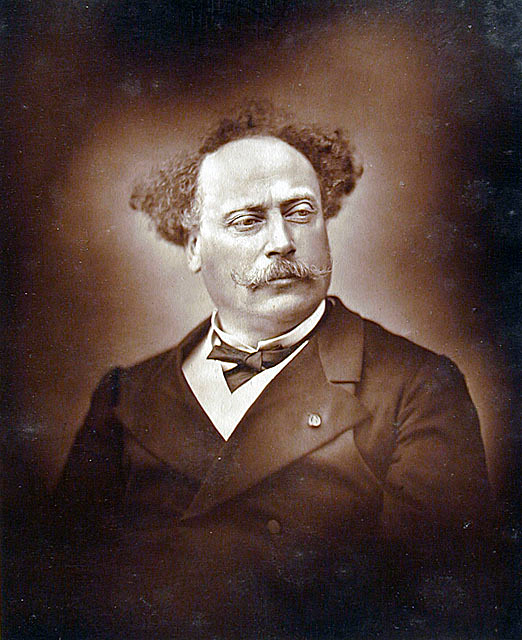
Alexandre
Dumas, fils
Dịch giả: Hải Nguyên
---
Tiếng Pháp:
La Dame aux Camilias
par Alexandre Dumas, fils
---
Tiếng Anh:
Camille
by Alexandre Dumas, fils - Translator: Sir Edmond Gosse (from
French to English) - The Project Gutenberg eBook of Camille
~
Chương 11
Đến
chặng này của câu chuyện Acmân dừng lại.
–
Anh có thể đóng dùm cửa sổ? – Anh nói với tôi, – Tôi bắt đầu thấy lạnh. Trong
thời gian ấy tôi sẽ đi nằm.
Tôi
đóng cửa sổ lại. Acmân còn rất yếu. Anh cởi chiếc áo ngủ ra, nằm lên giường, dựa
đầu lên gối trong chốc lát, như một người mệt mỏi vì chuyến đi dài ngày, hoặc bị
xúc động bởi những kỷ niệm nặng nề.
–
Có lẽ anh nói nhiều quá – tôi bảo anh ta – anh có muốn tôi đi về để cho anh ngủ
không? Anh sẽ kể tiếp đoạn cuối câu chuyện vào ngày khác.
–
Câu chuyện ấy có làm cho anh chán không?
–
Không, trái lại.
–
Thế thì tôi kể tiếp. Nếu anh để tôi ở lại một mình, tôi sẽ không ngủ được.
“Khi
tôi trở về nhà – anh kể tiếp – không cần phải nghĩ ngợi, tất cả những chi tiết
đó vẫn hiện ra trong tư tưởng tôi. Tôi không đi nằm được. Tôi bắt đầu suy nghĩ
về những gì đã xảy ra trong suốt ngày hôm nay. Sự gặp gỡ, sự giới thiệu, sự cam
kết của Macgơrit đối với tôi. Tất cả đều diễn ra rất nhanh, rất bất ngờ, nên có
những giây phút, tôi tưởng như tôi đang nằm mộng. Tuy nhiên, đó không phải là lần
đầu tiên một người con gái như Macgơrit hứa hẹn với một người đàn ông như thế:
đồng ý chấp nhận ngay ngày hôm sau, điều mà ngày hôm trước người ta yêu cầu.
Tôi
đã suy nghĩ điều đó một cách vô ích. Ấn tượng đầu tiên mà người tình tương lai
gây ra cho tôi thật quá mạnh, đến nỗi nó tồn tại mãi. Tôi vẫn cứng đầu không chịu
nhìn thấy nơi nàng một người con gái giống như những người con gái khác. Với bản
tính phù phiếm thường thấy ở đàn ông, tôi sẵn sàng tin rằng cô ấy không thể
không chia sẻ sức hấp dẫn đã thu hút tôi.
Tuy
nhiên, tôi có ngay trước mắt những ví dụ rất trái ngược. Tôi thường nghe người
ta bảo tình yêu của Macgơrit trở thành như một món hàng mà giá cả lên xuống tuỳ
theo mùa.
Nhưng
mặt khác, làm thế nào mà hoà hợp cái dư luận đó với sự từ chối liên tục của
nàng đối với ông bá tước trẻ mà chúng tôi đã gặp tại nhà nàng? Bạn sẽ bảo tôi,
ông này làm cho nàng chán ngấy và nàng được ông quận công chu cấp một cách đầy
đủ rồi? Nếu cần đến một tình nhân, nàng phải chọn cho được một người đàn ông
nàng thích. Thế tại sao nàng không chấp nhận Gatông, một người đẹp trai, thông
minh giàu có mà lại chấp nhận tôi, người mà nàng thấy là rất ngờ nghệch ngay từ
ban đầu tiếp xúc với tôi?
Vẫn
biết tình cờ có trong một phút đáng giá hơn sự chạy theo suốt một năm dài.
Đối
với tất cả những người dự bữa tối hôm đó, tôi là người độc nhất cảm thấy lo lắng,
khi nàng rời bàn ăn. Tôi đã đi theo nàng. Tôi đã xúc động đến nỗi không che giấu
được. Tôi đã khóc khi hôn tay nàng. Trường hợp đó, cộng với sự thăm viếng của
tôi hàng ngày trong suốt hai tháng trời nàng đau ốm, có thể cho nàng thấy nơi
tôi một người đàn ông khác hẳn những người đàn ông trước đây nàng đã gặp. Và có
thể nàng đã tự nhủ rằng nàng nên làm điều đó với một tình yêu được biểu lộ như
thế, như nàng đã làm điều đó biết bao nhiêu lần rồi, và nó chẳng có tác dụng gì
với nàng nữa cả.
Tất
cả những giả thiết đó, như bạn đã thấy, rất gần sự thật. Nhưng dù lý do sự bằng
lòng của nàng là thế nào đi nữa, vẫn có một điều chắc chắn, đó là nàng đã bằng
lòng.
Ôi,
tôi đã say mê Macgơrit. Tôi sắp được nàng. Tôi không thể đòi hỏi nơi nàng gì
hơn nữa. Tuy nhiên, tôi lặp lại, dù nàng chỉ là kỹ nữ, tôi đã thi vị hoá nàng
quá nhiều, đã xây dựng tình yêu đó thành một thứ tình yêu tuyệt vọng, cho nên đến
gần giây phút mà tôi không cần phải hy vọng nữa, tôi lại đâm ra nghi ngờ.
Suốt
đêm tôi không ngủ được.
Tôi
không nhận ra tôi. Tôi như điên dại nửa người. Khi thì, tôi thấy tôi không phải
đẹp lắm, không phải giàu lắm, cũng không đủ sang trọng để có được người đàn bà
như thế. Khi thì, tôi thấy tôi đầy kiêu ngạo về ý tưởng của sự chiếm hữu đó. Rồi
tôi bắt đầu sợ thái độ của Macgơrit đối với tôi chỉ là một bất thường trong vài
ba ngày và cảm nhận trước nỗi thống khổ có thể gây ra trong sự đổ vỡ bỗng chốc.
Tôi tự nhủ, tốt hơn là tối đó, tôi không nên đến nhà nàng và nên đi đâu đó, rồi
để thư lại cho nàng biết những lo sợ của tôi. Từ đó, tôi lại đi đến những hy vọng
không cùng, đến một sự tin tưởng không bờ bến. Tôi tạo ra những giấc mơ tương
lai không tưởng tượng được. Tôi tự nhủ, người con gái nhờ tôi sẽ lành bệnh về
thể xác cũng như về tinh thần. Tôi sẽ suốt đời sống với nàng và tình yêu của
nàng sẽ làm tôi sung sướng hơn cả tình yêu của những nữ đồng trinh.
Cuối
cùng, tôi không thể lặp lại cho bạn biết hàng nghìn ý nghĩ, từ tim tôi đã dâng
lên đầu tôi, và dần dần đã tắt theo giấc ngủ đến xâm chiếm tôi lúc trời bắt đầu
sáng.
Khi
tôi thức dậy, đã hai giờ rồi. Thời tiết thật huy hoàng. Tôi không còn nhớ, cuộc
đời đối với tôi đã có bao giờ tươi đẹp đến thế, tràn đầy thú vị đến như thế. Những
kỷ niệm đêm trước hiện ra trong tâm trí tôi, không bóng mờ, không chướng ngại,
và được tưng bừng chào đón bởi những hy vọng về buổi tối đến. Tôi sửa soạn một
cách vội vàng. Tôi thoả mãn và sẵn sàng làm những hành động tốt. Thỉnh thoảng
tim tôi lại nhảy lên vì vui mừng và tình yêu căng lên trong lồng ngực tôi. Một
cơn sốt dịu dàng xâm chiếm lấy tôi. Tôi không bâng khuâng gì nữa vì những lý do
làm tôi bận rộn trước khi ngủ. Tôi chỉ thấy kết quả. Tôi chỉ nghĩ đến giờ phút
mà tôi gặp lại Macgơrit.
Tôi
không thể nào ở nhà được. Căn phòng hình như quá hẹp để chứa đựng hạnh phúc của
tôi. Tôi cần cả thiên nhiên trọn vẹn để có thể tâm tư tình tự.
Tôi
ra đi.
Tôi
đi qua đường Antin. Chiếc xe ngựa của Macgơrit đang đợi trước cửa nhà nàng. Tôi
đi về phía Xăng Êlidê. Tôi yêu thương tất cả, ngay đến những người không quen
biết mà tôi gặp trên đường.
Tình
yêu thật là thánh thiện!
Sau
một giờ, tôi đi từ Macli đến ngã tư, rồi từ ngã tư đến Macli, tôi thấy chiếc xe
của Macgơrit từ xa. Tôi không nhận ra được như tôi đoán.
Lúc
đi vòng qua quảng trường Xăng Êlidê, cô dừng lại. Một thanh niên to lớn tách ra
từ một nhóm đông anh đang trò chuyện, tới nói chuyện với nàng.
Họ
nói chuyện trong giây lát. Người thanh niên trở lại với nhóm bạn của mình. Mấy
con ngựa lại đi. Và tôi lại gần nhóm người đó. Tôi nhận ra, người vừa nói chuyện
với Macgơrit là bá tước G. . . mà tôi đã thấy chân dung và Pruđăng đã cho tôi
biết. Đó là người đã giúp đỡ Macgơrit có được địa vị như ngày nay.
Chính
ông là người đêm qua nàng đã cấm không cho vào nhà. Tôi giả thiết là nàng đã dừng
xe lại, để cho ông ta biết lý do về sự ngăn cấm ấy. Và đồng thời, tôi cũng hy vọng
rằng nàng đã tìm một duyên cớ nào đó để khỏi tiếp chuyện với ông ta đêm sau.
Phần
còn lại ngày hôm ấy đã trôi qua như thế nào tôi không nhớ. Tôi đi từng bước,
tôi hút thuốc, tôi nói chuyện. Nhưng đã nói gì, tôi đã gặp ai, tính cho đến mãi
mười giờ đêm, tôi không còn giữ một kỷ niệm nào cả.
Tất
cả điều tôi nhớ lại là tôi về nhà, đã tiêu phí ba giờ để sửa soạn phục sức. Tôi
đã nhìn một trăm lần cái đồng hồ treo và cái đồng hồ đeo tay. Nhưng khốn nạn, cả
hai luôn luôn chạy đều chạy như nhau, đều chỉ giờ phút như nhau, để chỉ cùng một
giờ như nhau. Khi nghe tiếng chuông đổ mười giờ rưỡi, tôi tự nhủ đã đến giờ ra
đi.
Vào
thời gian đó, tôi ở đường Prôvân. Tôi đi theo đường Mông Blân, xuyên qua đại lộ,
đến đường Luy Grân, đến đường Po, Mahông, rồi đến đường Antin.
Tôi
nhìn lên cửa sổ nhà Macgơrit.
Thấy
có ánh đèn, tôi gọi chuông.
Tôi
hỏi người gác: “Có cô Giôchiê ở nhà không?” .
Anh
ta trả lời: “Cô ấy không bao giờ về nhà trước mười một giờ hay mười một giờ mười
lăm”.
Tôi
nhìn đồng hồ đeo tay.
Tôi
nghĩ tôi đã đi rất chậm rãi. Nhưng thật ra tôi chỉ mất năm phút để từ đường
Prôvân đến nhà Macgơrit.
Thế
là, tôi đi dạo trên một đường phố không quán xá và quạnh hiu trong giờ này.
Độ
nửa giờ sau Macgơrit trở về. Nàng bước xuống xe và nhìn quanh. Hình như nàng có
ý tìm ai.
Chiếc
xe chậm rãi quay đi. Chuồng ngựa và nơi để xe đặt ở nơi khác. Trong lúc
Macgơrit sắp gọi chuông tôi đến gần nàng và nói:
–
Xin chào!
–
A! Chào anh? – Nàng nói một giọng hơi ngờ ngợ về nỗi vui mừng đã gặp tôi ở đó.
–
Cô chẳng đã cho phép tôi gặp cô hôm nay sao?
–
Đúng vậy, tôi đã quên điều đó.
Lời
nói đó làm đảo lộn tất cả những ý nghĩ của tôi buổi sáng, tất cả những hy vọng
của tôi suốt ngày. Tuy nhiên, tôi bắt đầu tập làm quen với những cách đối xử
đó. Và tôi không bỏ đi, điều mà ngày xưa, nhất định tôi đã làm.
Chúng
tôi đi vào.
Nanin
đã mở cửa từ trước.
–
Pruđăng vẫn chưa về? – Macgơrit hỏi.
–
Thưa bà, chưa.
–
Khi bà ta về, hãy nói bà sang ngay cho. Trước tiên chị hãy tắt đèn phòng khách
đi. Và nếu có người đến hãy bảo rằng tôi chưa về.
Đó
thực là một người đàn bà bận rộn một công việc gì đó và có lẽ đang bị làm phiền
bởi một kẻ không được chào mời. Tôi không biết sẽ phải có thái độ như thế nào
và phải nói gì. Macgơrit đi về phía phòng ngủ của cô ta. Tôi đứng yên tại chỗ.
“Đến
đây” – Cô ta nói với tôi.
Cô
lấy mũ ra, lấy áo choàng bằng nỉ ra và ném cả lên giường rồi ngả người trên một
ghế bành lớn, gần lò sưởi mà cô ta đã cho đốt ấm mãi đến đầu mùa hạ. Và cô ta
nói với tôi, vừa mân mê cái dây đồng hồ đeo tay.
–
À, anh có chuyện gì mới để kể cho tôi nghe?
–
Không có gì cả, nếu không phải là chuyện tôi đã lầm lỗi khi đến đây tối nay.
–
Tại sao?
–
Bởi vì cô có vẻ không vừa ý, và chắc chắn, tôi đã làm phiền cô.
–
Anh không làm phiền tôi đâu. Chỉ tại tôi bị bệnh. Tôi đã đau suốt ngày. Tôi
không ngủ được. Và tôi bị nhức đầu ghê gớm.
–
Cô cho phép tôi về để cô có thể đi nghỉ.
–
Ồ! Anh có thể ở lại. Nếu tôi muốn đi nằm, tôi có thể nằm trước mặt anh.
Vào
lúc đó có người gọi chuông.
“Còn
ai đến nữa!” – Nàng nói với một vẻ khó chịu.
Giây
lát sau lại có tiếng gọi chuông.
–
Thế ra không có người nào mở cửa sao? Tôi phải đi mở vậy!
Thực
vậy, nàng đứng dậy và nói với tôi:
–
Anh đợi đây.
Nàng
đi ngang qua căn phòng. Tôi nghe tiếng mở cửa. . . Tôi lắng nghe.
Người
đàn ông mà nàng đã ra mở cửa cho, dừng lại ở phòng ăn. Nghe những tiếng đầu
tiên, tôi biết ngay là giọng của ông bá tước N. . .
–
Chiều này sức khoẻ cô ra sao? – Ông ta nói.
–
Ốm – Macgơrit trả lời, giọng khô khan.
–
Có lẽ tôi làm phiền cô?
–
Có thể.
–
Cô tiếp tôi như thế sao? Tôi đã làm gì cô, cô Macgơrit thân mến?
–
Anh bạn ơi, anh không làm gì tôi cả. Tôi bị bệnh. Tôi phải đi nằm. Như thế, anh
về đi để tôi vui lòng. Thật là phiền quá. Không chiều nào tôi về mà không thấy
anh xuất hiện trong năm phút. Anh muốn gì? Tôi sẽ là tình nhân của anh? Hãy
nghe tôi, tôi đã nói với anh trăm lần rồi, không là không. Anh làm tôi khó chịu
ghê gớm. Anh có thể đi đến một nơi khác. Tôi gặp lại anh lần này là lần cuối.
Tôi không chấp nhận anh. Điều ấy đã rõ ràng rồi. Vĩnh biệt. À, Nanin đã về. Nó
sẽ đem đèn cho anh đi ra. Xin chào!
Và
không thêm một lời nào, không nghe người thanh niên kia đang lẩm nhẩm điều gì,
Macgơrit trở về phòng nàng và đóng cửa lại một cách dữ dội. Và cũng qua cửa đó,
Nanin, đến lượt chị ta, cũng trở vào gần như tức khắc.
–
Chị nge tôi – Macgơrit nói – chị hãy bảo thẳng với tên ngốc đó, là tôi chán rồi,
tôi không muốn tiếp hắn nữa. Cuối cùng, tôi đã quá mệt mỏi để phải luôn luôn
nhìn thấy những con người ấy đến đây để đòi hỏi tôi chỉ một việc. Chúng nó trả
tiền cho tôi, chúng tưởng như thế là sạch nợ với tôi rồi! Nếu những người đàn
bà bắt đầu cái nghề tủi nhục của chúng tôi biết rõ là sẽ như thế nào, thì chắc
họ thích làm hầu phòng hơn. Nhưng không, thói khoe khoang, sự ham muốn những
cái áo dài, những cỗ xe, những viên kim cương đã lôi cuốn chúng tôi. Người ta
tin vào cái gì mà người ta muốn tin. Bởi vì sự bán thân cũng có cái đức tin của
nó. Người ta làm hao mòn dần dần trái tim người ta, thân xác người ta, sắc đẹp
người ta. Người ta ghê sợ như một con thú dữ, khinh bỉ như một tên cùng khốn.
Người ta bị bao vây bởi những kẻ luôn luôn đến để đòi hỏi nhiều hơn là để ban
phát. Và một ngày nào đó, người ta chết như một con chó chết, sau khi đã làm hư
hỏng những người khác và làm hư hỏng ngay cả mình nữa.
–
Xem kìa, bà hãy bình tĩnh – Nanin nói – tối nay bà bị xúc động quá đấy.
–
Cái áo dài này làm tôi bực bội – Macgơrit vừa nói vừa giật tung những móc áo –
Đưa cho tôi cái áo khoác. À, còn Pruđăng?
–
Bà ta chưa về. Khi nào bà ta về, tôi sẽ bảo bà ta sẽ đến gặp bà.
–
À, lại một con người nữa – Macgơrit vừa nói vừa cởi áo dài ra và choàng áo
khoác vào – A, lại một người nữa đó, biết tìm gặp tôi khi cần đến tôi, và không
thể giúp tôi một việc gì mà không tính công. Bà ấy biết rằng chiều nay tôi đang
chờ tin trả lời. Và tôi tin chắc bà ta đang lo chạy những công việc riêng tư của
mình mà không để ý gì đến việc giúp đỡ tôi cả.
–
Có thể bà ấy bị người ta giữ lại.
–
Hãy cho chúng tôi rượu dầm trái cây!
–
Bà sẽ làm cho bà đau thêm – Nanin nói.
–
Thây kệ, hãy đem trái cây, patê, hay cánh gà giò hoặc một cái gì đó cũng được,
ngay tức khắc. Tôi đang đói.
Nói
lại cho bạn biết cái ấn tượng mà cảnh tượng đó đã gây nên trong tôi chỉ là vô
ích. Bạn có thể đoán lấy, phải không?
–
Anh sẽ ăn tối với tôi – cô ta nói. – Trong lúc chờ đợi, anh hãy đọc sách. Tôi
phải đi vào phòng trang sức trong chốc lát.
Cô
ta đốt ngọn nến trên một giá đèn, mở cách cửa nơi chân giường và biến mất.
Còn
lại một mình, tôi bắt đầu suy nghĩ về cuộc đời của người con gái đó. Tình yêu
nơi tôi lớn thêm lên vì thương xót.
Tôi
sải những bước dài trong căn phòng nàng, vừa đi vừa nghĩ ngợi thì Pruđăng bước
vào.
–
À, anh đó à? – Bà ta nói – Macgơrit đâu rồi?
–
Trong phòng trang sức.
–
Tôi sẽ chờ, mà này cô ta bảo anh có duyên đấy. Anh biết điều đấy chứ?
–
Không.
–
Cô ta không nói cho anh biết tí nào sao?
–
Không một chút nào.
–
Anh đến đây có việc gì?
–
Tôi đến thăm cô ta.
–
Vào nửa đêm?
–
Sao lại không?
–
Hay nhỉ!
–
Cô ta tiếp tôi rất tệ.
–
Cô ta sẽ tiếp anh tử tế hơn.
–
Bà tin thế?
–
Tôi đem về cho cô ta một tin vui.
–
Cũng chẳng can chi. Thế cô ta có nói với bà về tôi không.
–
Chiều ngày qua hay đúng hơn là trong đêm qua, khi anh ra đi với bạn thân của
anh. . . Nhân đây, xin hỏi thêm, bạn anh là người như thế nào? Gatông R. . . ấy,
tôi xin thề, người ta gọi thế phải không?
–
Vâng – tôi nói và không nhịn được cười, khi nhớ đến tâm sự mà Gatông đã thổ lộ
với tôi trong lúc Pruđăng thú nhận mới biết sơ sơ về anh chàng.
–
Cậu ấy dễ thương, cậu ấy làm nghề gì?
–
Cậu ta có hai mươi ngàn frăng lợi tức.
–
Thật thế à? Thôi được, bây giờ trở lại chuyện anh. Macgơrit đã hỏi tin tức anh
nơi tôi. Cô ta hỏi: Anh là ai? Anh làm nghề gì? Cuối cùng là tất cả những gì
người ta có thể hỏi về một người đàn ông độ tuổi các anh. Tôi cho cô ấy biết tất
cả những gì tôi biết và nói thêm rằng anh là một anh chàng rất có duyên. Thế
đó.
–
Tôi cám ơn bà. Giờ đây, bà hãy nói cho tôi biết ngày qua cô ta đã nhờ bà giúp
việc gì?
–
Không việc gì cả. Chỉ để đuổi ông bá tước như cô ta muốn. Nhưng hôm nay cô ta
có nhờ tôi một việc. Và chiều nay, tôi đến đây để trả lời.
Vừa
lúc đó, Macgơrit từ phòng trang sức bước ra. Trên đầu là một mũ ngủ được trang
trí bằng một chòm tua màu vàng, mà người ta thường gọi là những dải su.
Trông
cô ta thật mê người.
Cô
ta đi chân trần, trong một đôi giày bằng sa tanh, và vừa làm xong công việc chải
chuốt móng tay.
–
À chị – cô ta nói khi trông thấy Pruđăng – chị có gặp ông quận công?
–
Đã gặp.
–
Ông ta nói gì với chị?
–
Ông ta đã đưa cho tôi.
–
Bao nhiêu?
–
Sáu ngàn.
–
Chị có đem theo đó không?
–
Có.
–
Ông ta có vẻ khó chịu không?
–
Không.
–
Con người đáng thương!
Câu
“Con người đáng thương” được nói bằng một giọng không thể diễn tả được.
Macgơrit
nhận sáu tờ bạc một ngàn frăng.
–
Thật đúng lúc – nàng nói – Pruđăng thân mến, chị có cần tiền không?
–
Cô biết chứ, cô em ạ, trong hai ngày nữa, ngày 15, nếu có thể cô cho tôi mược
ba hay bốn trăm frăng, cô sẽ giúp tôi nhiều đó.
–
Sáng mai sẽ có, bây giờ đã quá khuya để có thể đổi tiền lẻ được.
–
Đừng quên nhé.
–
Chị yên tâm. Chị ở lại dùng bữa tối với chúng tôi.
–
Không! Saclơ đang chờ tôi ở nhà.
–
Thế ra chị vẫn luôn luôn bị điên đầu với cậu ấy sao.
–
Ngốc quá em ạ. Thôi ngày mai. Chào Acmân.
Bà
Đuvecnoa ra về.
Macgơrit
mở ngăn tủ ra, vứt những tờ giấy bạc vào bên trong.
–
Anh cho phép em đi nằm! – Nàng vừa nói vừa mỉm cười và đi về phía giường nàng.
–
Không chỉ cho phép mà tôi còn yêu cầu nữa là khác.
Cô
ném cái khăn choàng ngoài xuống phía dưới chân giường và nằm xuống.
–
Giờ đây – cô nói – anh hãy đến ngồi gần em rồi chúng ta nói chuyện.
Pruđăng
nói đúng, câu trả lời chị ta đem về làm cho Macgơrit vui hẳn lên.
–
Anh tha thứ cho em thái độ cau có chiều này chứ?
–
Tôi sẵn sàng tha thứ cho cô tất cả những gì khác nữa.
–
Và anh yêu em chứ?
–
Điên lên được.
–
Mặc cho các tính xấu của em nữa?
–
Mặc cho tất cả.
–
Anh thề đi.
–
Vâng – tôi nói nho nhỏ.
Nanin
bưng thức ăn vào. Một con gà giò ướp lạnh, một chai rượu vang đỏ, những trái
dâu tây và hai phần ăn.
–
Tôi không làm rượu dầm trái cây – Nanin nói – rượu vang đỏ sẽ tốt hơn đối với
bà. Thưa ông, có phải thế không?
–
Chắc chắn thế – tôi trả lời, vẫn còn xúc động bởi những lời nói cuối cùng của
Macgơrit và đăm đăm nhìn nàng với đôi mắt cuồng nhiệt.
–
Được – cô ta nói – hãy đặt tất cả những món ăn trên bàn nhỏ và đẩy bàn đến gần
giường. Chúng tôi sẽ tự phục vụ lấy. Thế là chị đã thức ba đêm rồi, chắc chị cần
ngủ lắm, chị đi ngủ đi. Tôi không cần gì nữa.
–
Có cần đóng cửa lớn, khoá hai lần không?
–
Tôi tin là cần. Và nhất là dặn người ta, từ giờ đến trưa mai đừng để ai vào cả.
➖➖➖
Phần tiếng Pháp
La
Dame aux Camilias par Alexandre Dumas, fils
---
Chapitre XI
En
cet endroit de son récit, Armand s'arrêta.
--Voulez-vous
fermer la fenêtre? me dit-il, je commence à avoir froid. Pendant ce temps, je
vais me coucher.
Je
fermai la fenêtre. Armand, qui était très faible encore, ôta sa robe de chambre
et se mit au lit, laissant pendant quelques instants reposer sa tête sur
l'oreiller comme un homme fatigué d'une longue course ou agité de pénibles
souvenirs.
--Vous
avez peut-être trop parlé, lui dis-je; voulez-vous que je m'en aille et que je
vous laisse dormir? Vous me raconterez un autre jour la fin de cette histoire.
--Est-ce
qu'elle vous ennuie?
--Au
contraire.
--Je
vais continuer alors; si vous me laissiez seul, je ne dormirais pas.
--Quand
je rentrai chez moi, reprit-il, sans avoir besoin de se recueillir, tant tous
ces détails étaient encore présents à sa pensée, je ne me couchai pas; je me
mis à réfléchir sur l'aventure de la journée. La rencontre, la présentation,
l'engagement de Marguerite vis-à-vis de moi, tout avait été si rapide, si
inespéré, qu'il y avait des moments où je croyais avoir rêvé. Cependant ce
n'était pas la première fois qu'une fille comme Marguerite se promettait à un
homme pour le lendemain du jour où il le lui demandait.
J'avais
beau me faire cette réflexion, la première impression produite par ma future
maîtresse sur moi avait été si forte qu'elle subsistait toujours. Je m'entêtais
encore à ne pas voir en elle une fille semblable aux autres, et, avec la vanité
si commune à tous les hommes, j'étais prêt à croire qu'elle partageait
invinciblement pour moi l'attraction que j'avais pour elle.
Cependant
j'avais sous les yeux des exemples bien contradictoires, et j'avais entendu
dire souvent que l'amour de Marguerite était passé à l'état de denrée plus ou
moins chère, selon la saison.
Mais
comment aussi, d'un autre côté, concilier cette réputation avec les refus
continuels faits au jeune comte que nous avions trouvé chez elle?
Vous
me direz qu'il lui déplaisait et que, comme elle était splendidement entretenue
par le duc, pour faire tant que de prendre un autre amant, elle aimait mieux un
homme qui lui plût. Alors, pourquoi ne voulait-elle pas de Gaston, charmant,
spirituel, riche, et paraissait-elle vouloir de moi qu'elle avait trouvé si
ridicule la première fois qu'elle m'avait vu?
Il
est vrai qu'il y a des incidents d'une minute qui font plus qu'une cour d'une
année.
De
ceux qui se trouvaient au souper, j'étais le seul qui se fût inquiété en la
voyant quitter la table. Je l'avais suivie, j'avais été ému à ne pouvoir le
cacher, j'avais pleuré en lui baisant la main. Cette circonstance, réunie à mes
visites quotidiennes pendant les deux mois de sa maladie, avait pu lui faire
voir en moi un autre homme que ceux connus jusqu'alors, et peut-être
s'était-elle dit qu'elle pouvait bien faire pour un amour exprimé de cette
façon ce qu'elle avait fait tant de fois, que cela n'avait déjà plus de
conséquence pour elle.
Toutes
ces suppositions, comme vous le voyez, étaient assez vraisemblables; mais
quelle que fût la raison à son consentement, il y avait une chose certaine,
c'est qu'elle avait consenti.
Or,
j'étais amoureux de Marguerite, j'allais l'avoir, je ne pouvais rien lui
demander de plus. Cependant, je vous le répète, quoique ce fût une fille
entretenue, je m'étais tellement, peut-être pour la poétiser, fait de cet amour
un amour sans espoir, que plus le moment approchait où je n'aurais même plus
besoin d'espérer, plus je doutais.
Je
ne fermai pas les yeux de la nuit.
Je
ne me reconnaissais pas. J'étais à moitié fou. Tantôt je ne me trouvais ni
assez beau, ni assez riche, ni assez élégant pour posséder une pareille femme,
tantôt je me sentais plein de vanité à l'idée de cette possession: puis je me
mettais à craindre que Marguerite n'eût pour moi qu'un caprice de quelques
jours, et, pressentant un malheur dans une rupture prompte, je ferais peut-être
mieux, me disais-je, de ne pas aller le soir chez elle, et de partir en lui
écrivant mes craintes. De là, je passais à des espérances sans limites, à une
confiance sans bornes. Je faisais des rêves d'avenir incroyables; je me disais
que cette fille me devrait sa guérison physique et morale, que je passerais toute
ma vie avec elle, et que son amour me rendrait plus heureux que les plus
virginales amours.
Enfin,
je ne pourrais vous répéter les mille pensées qui montaient de mon cœur à ma
tête et qui s'éteignirent peu à peu dans le sommeil qui me gagna au jour.
Quand
je me réveillai, il était deux heures. Le temps était magnifique. Je ne me
rappelle pas que la vie m'ait jamais paru aussi belle et aussi pleine. Les
souvenirs de la veille se représentaient à mon esprit, sans ombres, sans
obstacles et gaiement escortés des espérances du soir. Je m'habillai à la hâte.
J'étais content et capable des meilleures actions. De temps en temps mon cœur
bondissait de joie et d'amour dans ma poitrine. Une douce fièvre m'agitait. Je
ne m'inquiétais plus des raisons qui m'avaient préoccupé avant que je
m'endormisse. Je ne voyais que le résultat, je ne songeais qu'à l'heure où je
devais revoir Marguerite.
Il
me fut impossible de rester chez moi. Ma chambre me semblait trop petite pour
contenir mon bonheur; j'avais besoin de la nature entière pour m'épancher.
Je
sortis.
Je
passai par la rue d'Antin. Le coupé de Marguerite l'attendait à sa porte; je me
dirigeai du côté des Champs-Elysées. J'aimais, sans même les connaître, tous
les gens que je rencontrais.
Comme
l'amour rend bon!
Au
bout d'une heure que je me promenais des chevaux de Marly au rond-point et du
rond-point aux chevaux de Marly, je vis de loin la voiture de Marguerite; je ne
la reconnus pas, je la devinai.
Au
moment de tourner l'angle des Champs-Elysées, elle se fit arrêter, et un grand
jeune homme se détacha d'un groupe où il causait pour venir causer avec elle.
Ils
causèrent quelques instants; le jeune homme rejoignit ses amis, les chevaux
repartirent, et moi, qui m'étais approché du groupe, je reconnus dans celui qui
avait parlé à Marguerite ce comte de G... dont j'avais vu le portrait et que
Prudence m'avait signalé comme celui à qui Marguerite devait sa position.
C'était
à lui qu'elle avait fait défendre sa porte, la veille; je supposai qu'elle
avait fait arrêter sa voiture pour lui donner la raison de cette défense, et
j'espérai qu'en même temps elle avait trouvé quelque nouveau prétexte pour ne
pas le recevoir la nuit suivante.
Comment
le reste de la journée se passa, je l'ignore; je marchai, je fumai, je causai,
mais de ce que je dis, de ceux que je rencontrai, à dix heures du soir, je
n'avais aucun souvenir.
Tout
ce que je me rappelle, c'est que je rentrai chez moi, que je passai trois
heures à ma toilette, et que je regardai cent fois ma pendule et ma montre, qui
malheureusement allaient l'une comme l'autre.
Quand
dix heures et demie sonnèrent, je me dis qu'il était temps de partir.
Je
demeurais à cette époque rue de Provence: je suivis la rue du Mont-Blanc, je
traversai le boulevard, pris la rue Louis-le-Grand, la rue de Port-Mahon, et la
rue d'Antin. Je regardai aux fenêtres de Marguerite.
Il
y avait de la lumière.
Je
sonnai.
Je
demandai au portier si mademoiselle Gautier était chez elle.
Il
me répondit qu'elle ne rentrait jamais avant onze heures ou onze heures un
quart.
Je
regardai ma montre.
J'avais
cru venir tout doucement, je n'avais mis que cinq minutes pour venir de la rue
de Provence chez Marguerite.
Alors,
je me promenai dans cette rue sans boutiques, et déserte à cette heure.
Au
bout d'une demi-heure Marguerite arriva. Elle descendit de son coupé en
regardant autour d'elle, comme si elle eût cherché quelqu'un.
La
voiture repartit au pas, les écuries et la remise n'étant pas dans la maison.
Au moment où Marguerite allait sonner, je m'approchai et lui dis:
--Bonsoir!
--Ah!
c'est vous? me dit-elle d'un ton peu rassurant sur le plaisir qu'elle avait à
me trouver là.
--Ne
m'avez-vous pas permis de venir vous faire visite aujourd'hui?
--C'est
juste; je l'avais oublié.
Ce
mot renversait toutes mes réflexions du matin, toutes mes espérances de la
journée. Cependant, je commençais à m'habituer à ces façons et je ne m'en allai
pas, ce que j'eusse évidemment fait autrefois.
Nous
entrâmes.
Nanine
avait ouvert la porte d'avance.
--Prudence
est-elle rentrée? demanda Marguerite.
--Non,
madame.
--Va
dire que dès qu'elle rentrera elle vienne. Auparavant, éteins la lampe du
salon, et, s'il vient quelqu'un, réponds que je ne suis pas rentrée et que je
ne rentrerai pas.
C'était
bien là une femme préoccupée de quelque chose et peut-être ennuyée d'un
importun. Je ne savais quelle figure faire ni que dire. Marguerite se dirigea
du côté de sa chambre à coucher; je restai où j'étais.
--Venez,
me dit-elle.
Elle
ôta son chapeau, son manteau de velours et les jeta sur son lit, puis se laissa
tomber dans un grand fauteuil, auprès du feu qu'elle faisait faire jusqu'au
commencement de l'été, et me dit en jouant avec la chaîne de sa montre:
--Eh
bien, que me conterez-vous de neuf?
--Rien,
sinon que j'ai eu tort de venir ce soir.
--Pourquoi?
--Parce
que vous paraissez contrariée et que, sans doute, je vous ennuie.
--Vous
ne m'ennuyez pas; seulement je suis malade, j'ai souffert toute la journée, je
n'ai pas dormi et j'ai une migraine affreuse.
--Voulez-vous
que je me retire pour vous laisser mettre au lit?
--Oh!
vous pouvez rester; si je veux me coucher, je me coucherai bien devant vous.
En
ce moment on sonna.
--Qui
vient encore? dit-elle avec un mouvement d'impatience.
Quelques
instants après, on sonna de nouveau.
--Il
n'y a donc personne pour ouvrir? Il va falloir que j'ouvre moi-même.
En
effet, elle se leva en me disant:
--Attendez
ici.
Elle
traversa l'appartement, et j'entendis ouvrir la porte d'entrée.
--J'écoutai.
Celui
à qui elle avait ouvert s'arrêta dans la salle à manger. Aux premiers mots, je
reconnus la voix du jeune comte de N...
--Comment
vous portez-vous ce soir? disait-il.
--Mal,
répondit sèchement Marguerite.
--Est-ce
que je vous dérange?
--Peut-être.
--Comme
vous me recevez! Que vous ai-je fait, ma chère Marguerite?
--Mon
cher ami, vous ne m'avez rien fait. Je suis malade, il faut que je me couche;
ainsi vous allez me faire le plaisir de vous en aller. Cela m'assomme de ne pas
pouvoir rentrer le soir sans vous voir apparaître cinq minutes après. Qu'est-ce
que vous voulez? que je sois votre maîtresse? Eh bien, je vous ai déjà dit cent
fois que non, que vous m'agacez horriblement, et que vous pouvez vous adresser
autre part. Je vous le répète aujourd'hui pour la dernière fois: je ne veux pas
de vous, c'est bien convenu; adieu. Tenez, voici Nanine qui rentre; elle va vous
éclairer. Bonsoir.
Et,
sans ajouter un mot, sans écouter ce que balbutiait le jeune homme, Marguerite
revint dans sa chambre et referma violemment la porte, par laquelle Nanine, à
son tour, rentra presque immédiatement.
--Tu
m'entends, lui dit Marguerite, tu diras toujours à cet imbécile que je n'y suis
pas ou que je ne veux pas le recevoir. Je suis lasse, à la fin, de voir sans
cesse des gens qui viennent me demander la même chose, qui me payent et qui se
croient quittes avec moi. Si celles qui commencent notre honteux métier
savaient ce que c'est, elles se feraient plutôt femmes de chambre. Mais non; la
vanité d'avoir des robes, des voitures, des diamants nous entraîne; on croit à
ce que l'on entend, car la prostitution a sa foi, et l'on use peu à peu son
cœur, son corps, sa beauté; on est redoutée comme une bête fauve, méprisée
comme un paria, on n'est entourée que de gens qui vous prennent toujours plus
qu'ils ne vous donnent, et on s'en va un beau jour crever comme un chien, après
avoir perdu les autres et s'être perdue soi-même.
--Voyons,
madame, calmez-vous, dit Nanine; vous avez mal aux nerfs ce soir.
--Cette
robe me gêne, reprit Marguerite en faisant sauter les agrafes de son corsage;
donne-moi un peignoir. Eh bien, et Prudence?
--Elle
n'était pas rentrée, mais on l'enverra à madame dès qu'elle rentrera.
--En
voilà encore une, continua Marguerite en ôtant sa robe et en passant un
peignoir blanc, en voilà encore une qui sait bien me trouver quand elle a
besoin de moi, et qui ne peut pas me rendre un service de bonne grâce. Elle
sait que j'attends cette réponse ce soir, qu'il me la faut, que je suis
inquiète, et je suis sûre qu'elle est allée courir sans s'occuper de moi.
--Peut-être
a-t-elle été retenue?
--Fais-nous
donner le punch.
--Vous
allez encore vous faire du mal, dit Nanine.
--Tant
mieux! Apporte-moi aussi des fruits, du pâté ou une aile de poulet, quelque
chose tout de suite, j'ai faim.
Vous
dire l'impression que cette scène me causait, c'est inutile; vous le devinez,
n'est-ce pas?
--Vous
allez souper avec moi, me dit-elle; en attendant, prenez un livre, je vais
passer un instant dans mon cabinet de toilette.
Elle
alluma les bougies d'un candélabre, ouvrit une porte au pied de son lit et
disparut.
Pour
moi, je me mis à réfléchir sur la vie de cette fille, et mon amour s'augmenta
de pitié.
Je
me promenais à grands pas dans cette chambre, tout en songeant, quand Prudence
entra.
--Tiens,
vous voilà? me dit-elle: où est Marguerite?
--Dans
son cabinet de toilette.
--Je
vais l'attendre. Dites donc, elle vous trouve charmant; saviez-vous cela?
--Non.
--Elle
ne vous l'a pas dit un peu?
--Pas
du tout.
--Comment
êtes-vous ici?
--Je
viens lui faire une visite.
--À
minuit?
--Pourquoi
pas?
--Farceur!
--Elle
m'a même très mal reçu.
--Elle
va mieux vous recevoir.
--Vous
croyez?
--Je
lui apporte une bonne nouvelle.
--Il
n'y a pas de mal; ainsi elle vous a parlé de moi?
--Hier
au soir, ou plutôt cette nuit, quand vous avez été parti avec votre ami... à
propos, comment va-t-il, votre ami? C'est Gaston R..., je crois, qu'on
l'appelle?
--Oui,
dis-je, sans pouvoir m'empêcher de sourire en me rappelant la confidence que
Gaston m'avait faite, et en voyant que Prudence savait à peine son nom.
--Il
est gentil, ce garçon-là; qu'est-ce qu'il fait?
--Il
a vingt-cinq mille francs de rente.
--Ah!
vraiment! eh bien, pour en revenir à vous, Marguerite m'a questionnée sur votre
compte; elle m'a demandé qui vous étiez, ce que vous faisiez, quelles avaient
été vos maîtresses; enfin tout ce qu'on peut demander sur un homme de votre
âge. Je lui ai dit tout ce que je sais, en ajoutant que vous êtes un charmant
garçon, et voilà.
--Je
vous remercie; maintenant, dites-moi donc de quelle commission elle vous avait
chargée hier.
--D'aucune;
c'était pour faire partir le comte, ce qu'elle disait, mais elle m'en a chargée
d'une pour aujourd'hui, et c'est la réponse que je lui apporte ce soir.
En
ce moment, Marguerite sortit de son cabinet de toilette, coquettement coiffée
de son bonnet de nuit orné de touffes de rubans jaunes, appelées techniquement
des choux.
Elle
était ravissante ainsi.
Elle
avait ses pieds nus dans des pantoufles de satin, et achevait la toilette de
ses ongles.
--Eh
bien, dit-elle en voyant Prudence, avez-vous vu le duc?
--Parbleu!
--Et
que vous a-t-il dit?
--Il
m'a donné.
--Combien?
--Six
mille.
--Vous
les avez?
--Oui.
--A-t-il
eu l'air contrarié?
--Non.
--Pauvre
homme!
Ce
pauvre homme! fut dit d'un ton impossible à rendre. Marguerite prit les six
billets de mille francs.
--Il
était temps, dit-elle. Ma chère Prudence, avez-vous besoin d'argent?
--Vous
savez, mon enfant, que c'est dans deux jours le 15, si vous pouviez me prêter
trois ou quatre cents francs, vous me rendriez service.
--Envoyez
demain matin, il est trop tard pour faire changer.
--N'oubliez
pas.
--Soyez
tranquille. Soupez-vous avec nous?
--Non,
Charles m'attend chez moi.
--Vous
en êtes donc toujours folle?
--Toquée,
ma chère! A demain. Adieu, Armand.
Madame
Duvernoy sortit.
Marguerite
ouvrit son étagère et jeta dedans les billets de banque.
--Vous
permettez que je me couche! dit-elle en souriant et en se dirigeant vers son
lit.
--Non
seulement je vous le permets, mais encore je vous en prie.
Elle
rejeta sur le pied de son lit la guipure qui le couvrait et se coucha.
--Maintenant,
dit-elle, venez vous asseoir près de moi et causons.
Prudence
avait raison: la réponse qu'elle avait apportée à Marguerite l'égayait.
--Vous
me pardonnez ma mauvaise humeur de ce soir? me dit-elle en me prenant la main.
--Je
suis prêt à vous en pardonner bien d'autres.
--Et
vous m'aimez?
--À
en devenir fou.
--Malgré
mon mauvais caractère?
--Malgré
tout.
--Vous
me le jurez!
--Oui,
lui dis-je tout bas.
Nanine
entra alors portant des assiettes, un poulet froid, une bouteille de bordeaux,
des fraises et deux couverts.
--Je
ne vous ai pas fait faire du punch, dit Nanine, le bordeaux est meilleur pour
vous. N'est-ce pas, monsieur?
--Certainement,
répondis-je, tout ému encore des dernières paroles de Marguerite et les yeux
ardemment fixés sur elle.
--Bien,
dit-elle, mets tout cela sur la petite table, approche-la du lit; nous nous
servirons nous-mêmes. Voilà trois nuits que tu passes, tu dois avoir envie de
dormir, va te coucher; je n'ai plus besoin de rien.
--Faut-il
fermer la porte à double tour?
--Je
le crois bien! Et surtout dis qu'on ne laisse entrer personne demain avant
midi.
➖➖➖
Phần tiếng Anh
Camille
by Alexandre Dumas, fils - Translator: Sir Edmond Gosse (from
French to English) - The Project Gutenberg eBook of Camille
---
Chapter XI
At
this point Armand stopped.
“Would
you close the window for me?” he said. “I am beginning to feel cold. Meanwhile,
I will get into bed.”
I
closed the window. Armand, who was still very weak, took off his dressing-gown
and lay down in bed, resting his head for a few moments on the pillow, like a
man who is tired by much talking or disturbed by painful memories.
“Perhaps
you have been talking too much,” I said to him. “Would you rather for me to go
and leave you to sleep? You can tell me the rest of the story another day.”
“Are
you tired of listening to it?”
“Quite
the contrary.”
“Then
I will go on. If you left me alone, I should not sleep.”
When
I returned home (he continued, without needing to pause and recollect himself,
so fresh were all the details in his mind), I did not go to bed, but began to
reflect over the day’s adventure. The meeting, the introduction, the promise of
Marguerite, had followed one another so rapidly, and so unexpectedly, that
there were moments when it seemed to me I had been dreaming. Nevertheless, it
was not the first time that a girl like Marguerite had promised herself to a
man on the morrow of the day on which he had asked for the promise.
Though,
indeed, I made this reflection, the first impression produced on me by my
future mistress was so strong that it still persisted. I refused obstinately to
see in her a woman like other women, and, with the vanity so common to all men,
I was ready to believe that she could not but share the attraction which drew
me to her.
Yet,
I had before me plenty of instances to the contrary, and I had often heard that
the affection of Marguerite was a thing to be had more or less dear, according
to the season.
But,
on the other hand, how was I to reconcile this reputation with her constant
refusal of the young count whom we had found at her house? You may say that he
was unattractive to her, and that, as she was splendidly kept by the duke, she
would be more likely to choose a man who was attractive to her, if she were to
take another lover. If so, why did she not choose Gaston, who was rich, witty,
and charming, and why did she care for me, whom she had thought so ridiculous
the first time she had seen me?
It
is true that there are events of a moment which tell more than the courtship of
a year. Of those who were at the supper, I was the only one who had been
concerned at her leaving the table. I had followed her, I had been so affected
as to be unable to hide it from her, I had wept as I kissed her hand. This
circumstance, added to my daily visits during the two months of her illness,
might have shown her that I was somewhat different from the other men she knew,
and perhaps she had said to herself that for a love which could thus manifest
itself she might well do what she had done so often that it had no more
consequence for her.
All
these suppositions, as you may see, were improbable enough; but whatever might
have been the reason of her consent, one thing was certain, she had consented.
Now,
I was in love with Marguerite. I had nothing more to ask of her. Nevertheless,
though she was only a kept woman, I had so anticipated for myself, perhaps to
poetize it a little, a hopeless love, that the nearer the moment approached
when I should have nothing more to hope, the more I doubted. I did not close my
eyes all night.
I
scarcely knew myself. I was half demented. Now, I seemed to myself not handsome
or rich or elegant enough to possess such a woman, now I was filled with vanity
at the thought of it; then I began to fear lest Marguerite had no more than a
few days’ caprice for me, and I said to myself that since we should soon have
to part, it would be better not to keep her appointment, but to write and tell
her my fears and leave her. From that I went on to unlimited hope, unbounded
confidence. I dreamed incredible dreams of the future; I said to myself that
she should owe to me her moral and physical recovery, that I should spend my
whole life with her, and that her love should make me happier than all the
maidenly loves in the world.
But
I can not repeat to you the thousand thoughts that rose from my heart to my
head, and that only faded away with the sleep that came to me at daybreak.
When
I awoke it was two o’clock. The weather was superb. I don’t think life ever
seemed to me so beautiful and so full of possibilities. The memories of the
night before came to me without shadow or hindrance, escorted gaily by the
hopes of the night to come. From time to time my heart leaped with love and joy
in my breast. A sweet fever thrilled me. I thought no more of the reasons which
had filled my mind before I slept. I saw only the result, I thought only of the
hour when I was to see Marguerite again.
It
was impossible to stay indoors. My room seemed too small to contain my
happiness. I needed the whole of nature to unbosom myself.
I
went out. Passing by the Rue d’Antin, I saw Marguerite’s coupé waiting for her
at the door. I went toward the Champs-Elysées. I loved all the people whom I
met. Love gives one a kind of goodness.
After
I had been walking for an hour from the Marly horses to the Rond-Point, I saw
Marguerite’s carriage in the distance; I divined rather than recognised it. As
it was turning the corner of the Champs-Elysées it stopped, and a tall young
man left a group of people with whom he was talking and came up to her. They
talked for a few moments; the young man returned to his friends, the horses set
out again, and as I came near the group I recognised the one who had spoken to
Marguerite as the Comte de G., whose portrait I had seen and whom Prudence had
indicated to me as the man to whom Marguerite owed her position. It was to him
that she had closed her doors the night before; I imagined that she had stopped
her carriage in order to explain to him why she had done so, and I hoped that
at the same time she had found some new pretext for not receiving him on the
following night.
How
I spent the rest of the day I do not know; I walked, smoked, talked, but what I
said, whom I met, I had utterly forgotten by ten o’clock in the evening.
All
I remember is that when I returned home, I spent three hours over my toilet,
and I looked at my watch and my clock a hundred times, which unfortunately both
pointed to the same hour.
When
it struck half past ten, I said to myself that it was time to go.
I
lived at that time in the Rue de Provence; I followed the Rue du Mont-Blanc,
crossed the Boulevard, went up the Rue Louis-le-Grand, the Rue de Port-Mahon,
and the Rue d’Antin. I looked up at Marguerite’s windows. There was a light. I
rang. I asked the porter if Mlle. Gautier was at home. He replied that she
never came in before eleven or a quarter past eleven. I looked at my watch. I
intended to come quite slowly, and I had come in five minutes from the Rue de
Provence to the Rue d’Antin.
I
walked to and fro in the street; there are no shops, and at that hour it is
quite deserted. In half an hour’s time Marguerite arrived. She looked around
her as she got down from her coupé, as if she were looking for some one. The
carriage drove off; the stables were not at the house. Just as Marguerite was
going to ring, I went up to her and said, “Good-evening.”
“Ah,
it is you,” she said, in a tone that by no means reassured me as to her
pleasure in seeing me.
“Did
you not promise me that I might come and see you to-day?”
“Quite
right. I had forgotten.”
This
word upset all the reflections I had had during the day. Nevertheless, I was
beginning to get used to her ways, and I did not leave her, as I should
certainly have done once. We entered. Nanine had already opened the door.
“Has
Prudence come?” said Marguerite.
“No,
madame.”
“Say
that she is to be admitted as soon as she comes. But first put out the lamp in
the drawing-room, and if anyone comes, say that I have not come back and shall
not be coming back.”
She
was like a woman who is preoccupied with something, and perhaps annoyed by an
unwelcome guest. I did not know what to do or say. Marguerite went toward her
bedroom; I remained where I was.
“Come,”
she said.
She
took off her hat and her velvet cloak and threw them on the bed, then let
herself drop into a great armchair beside the fire, which she kept till the
very beginning of summer, and said to me as she fingered her watch-chain:
“Well,
what news have you got for me?”
“None,
except that I ought not to have come to-night.”
“Why?”
“Because
you seem vexed, and no doubt I am boring you.”
“You
are not boring me; only I am not well; I have been suffering all day. I could
not sleep, and I have a frightful headache.”
“Shall
I go away and let you go to bed?”
“Oh,
you can stay. If I want to go to bed I don’t mind your being here.”
At
that moment there was a ring.
“Who
is coming now?” she said, with an impatient movement.
A
few minutes after there was another ring.
“Isn’t
there anyone to go to the door? I shall have to go.” She got up and said to me,
“Wait here.”
She
went through the rooms, and I heard her open the outer door. I listened.
The
person whom she had admitted did not come farther than the dining-room. At the
first word I recognised the voice of the young Comte de N.
“How
are you this evening?” he said.
“Not
well,” replied Marguerite drily.
“Am
I disturbing you?”
“Perhaps.”
“How
you receive me! What have I done, my dear Marguerite?”
“My
dear friend, you have done nothing. I am ill; I must go to bed, so you will be
good enough to go. It is sickening not to be able to return at night without
your making your appearance five minutes afterward. What is it you want? For me
to be your mistress? Well, I have already told you a hundred times, No; you
simply worry me, and you might as well go somewhere else. I repeat to you
to-day, for the last time, I don’t want to have anything to do with you; that’s
settled. Good-bye. Here’s Nanine coming in; she can light you to the door.
Good-night.”
Without
adding another word, or listening to what the young man stammered out,
Marguerite returned to the room and slammed the door. Nanine entered a moment
after.
“Now
understand,” said Marguerite, “you are always to say to that idiot that I am
not in, or that I will not see him. I am tired out with seeing people who
always want the same thing; who pay me for it, and then think they are quit of
me. If those who are going to go in for our hateful business only knew what it
really was they would sooner be chambermaids. But no, vanity, the desire of
having dresses and carriages and diamonds carries us away; one believes what
one hears, for here, as elsewhere, there is such a thing as belief, and one
uses up one’s heart, one’s body, one’s beauty, little by little; one is feared
like a beast of prey, scorned like a pariah, surrounded by people who always
take more than they give; and one fine day one dies like a dog in a ditch,
after having ruined others and ruined one’s self.”
“Come,
come, madame, be calm,” said Nanine; “your nerves are a bit upset to-night.”
“This
dress worries me,” continued Marguerite, unhooking her bodice; “give me a
dressing-gown. Well, and Prudence?”
“She
has not come yet, but I will send her to you, madame, the moment she comes.”
“There’s
one, now,” Marguerite went on, as she took off her dress and put on a white
dressing-gown, “there’s one who knows very well how to find me when she is in
want of me, and yet she can’t do me a service decently. She knows I am waiting
for an answer. She knows how anxious I am, and I am sure she is going about on
her own account, without giving a thought to me.”
“Perhaps
she had to wait.”
“Let
us have some punch.”
“It
will do you no good, madame,” said Nanine.
“So
much the better. Bring some fruit, too, and a paté or a wing of chicken;
something or other, at once. I am hungry.”
Need
I tell you the impression which this scene made upon me, or can you not imagine
it?
“You
are going to have supper with me,” she said to me; “meanwhile, take a book. I
am going into my dressing-room for a moment.”
She
lit the candles of a candelabra, opened a door at the foot of the bed, and
disappeared.
I
began to think over this poor girl’s life, and my love for her was mingled with
a great pity. I walked to and fro in the room, thinking over things, when
Prudence entered.
“Ah,
you here?”’ she said, “where is Marguerite?”
“In
her dressing-room.”
“I
will wait. By the way, do you know she thinks you charming?”
“No.”
“She
hasn’t told you?”
“Not
at all.”
“How
are you here?”
“I
have come to pay her a visit.”
“At
midnight?”
“Why
not?”
“Farceur!”
“She
has received me, as a matter of fact, very badly.”
“She
will receive you better by and by.”
“Do
you think so?”
“I
have some good news for her.”
“No
harm in that. So she has spoken to you about me?”
“Last
night, or rather to-night, when you and your friend went. By the way, what is
your friend called? Gaston R., his name is, isn’t it?”
“Yes,”
said I, not without smiling, as I thought of what Gaston had confided to me,
and saw that Prudence scarcely even knew his name.
“He
is quite nice, that fellow; what does he do?”
“He
has twenty-five thousand francs a year.”
“Ah,
indeed! Well, to return to you. Marguerite asked me all about you: who you
were, what you did, what mistresses you had had; in short, everything that one
could ask about a man of your age. I told her all I knew, and added that you
were a charming young man. That’s all.”
“Thanks.
Now tell me what it was she wanted to say to you last night.”
“Nothing
at all. It was only to get rid of the count; but I have really something to see
her about to-day, and I am bringing her an answer now.”
At
this moment Marguerite reappeared from her dressing-room, wearing a coquettish
little nightcap with bunches of yellow ribbons, technically known as
“cabbages.” She looked ravishing. She had satin slippers on her bare feet, and
was in the act of polishing her nails.
“Well,”
she said, seeing Prudence, “have you seen the duke?”
“Yes,
indeed.”
“And
what did he say to you?”
“He
gave me—”
“How
much?”
“Six
thousand.”
“Have
you got it?”
“Yes.
“Did
he seem put out?”
“No.”
“Poor
man!”
This
“Poor man!” was said in a tone impossible to render. Marguerite took the six
notes of a thousand francs.
“It
was quite time,” she said. “My dear Prudence, are you in want of any money?”
“You
know, my child, it is the 15th in a couple of days, so if you could lend me
three or four hundred francs, you would do me a real service.”
“Send
over to-morrow; it is too late to get change now.”
“Don’t
forget.”
“No
fear. Will you have supper with us?”
“No,
Charles is waiting for me.”
“You
are still devoted to him?”
“Crazy,
my dear! I will see you to-morrow. Good-bye, Armand.”
Mme.
Duvernoy went out.
Marguerite
opened the drawer of a side-table and threw the bank-notes into it.
“Will
you permit me to get into bed?” she said with a smile, as she moved toward the
bed.
“Not
only permit, but I beg of you.”
She
turned back the covering and got into bed.
“Now,”
said she, “come and sit down by me, and let’s have a talk.”
Prudence
was right: the answer that she had brought to Marguerite had put her into a
good humour.
“Will
you forgive me for my bad temper tonight?” she said, taking my hand.
“I
am ready to forgive you as often as you like.”
“And
you love me?”
“Madly.”
“In
spite of my bad disposition?”
“In
spite of all.”
“You
swear it?”
“Yes,”
I said in a whisper.
Nanine
entered, carrying plates, a cold chicken, a bottle of claret, and some
strawberries.
“I
haven’t had any punch made,” said Nanine; “claret is better for you. Isn’t it,
sir?”
“Certainly,”
I replied, still under the excitement of Marguerite’s last words, my eyes fixed
ardently upon her.
“Good,”
said she; “put it all on the little table, and draw it up to the bed; we will
help ourselves. This is the third night you have sat up, and you must be in
want of sleep. Go to bed. I don’t want anything more.”
“Shall
I lock the door?”
“I
should think so! And above all, tell them not to admit anybody before midday.”
➖➖➖


Không có nhận xét nào:
Đăng nhận xét